What you'll find in this article
In this edition of Meet the Investment Committee, External IC Member Jonathan Marriott reflects on more than 40 years in investment management, from the early days of the Eurobond market to nearly three decades on investment and charity committees. He explains how Cadro's Investment Committee prepares for and reaches its decisions, why diversity of view helps guard against groupthink, and what lessons he has drawn from market crises including those of 1974, 1987, the Great Recession and Covid.
Introducing Jonathan Marriott
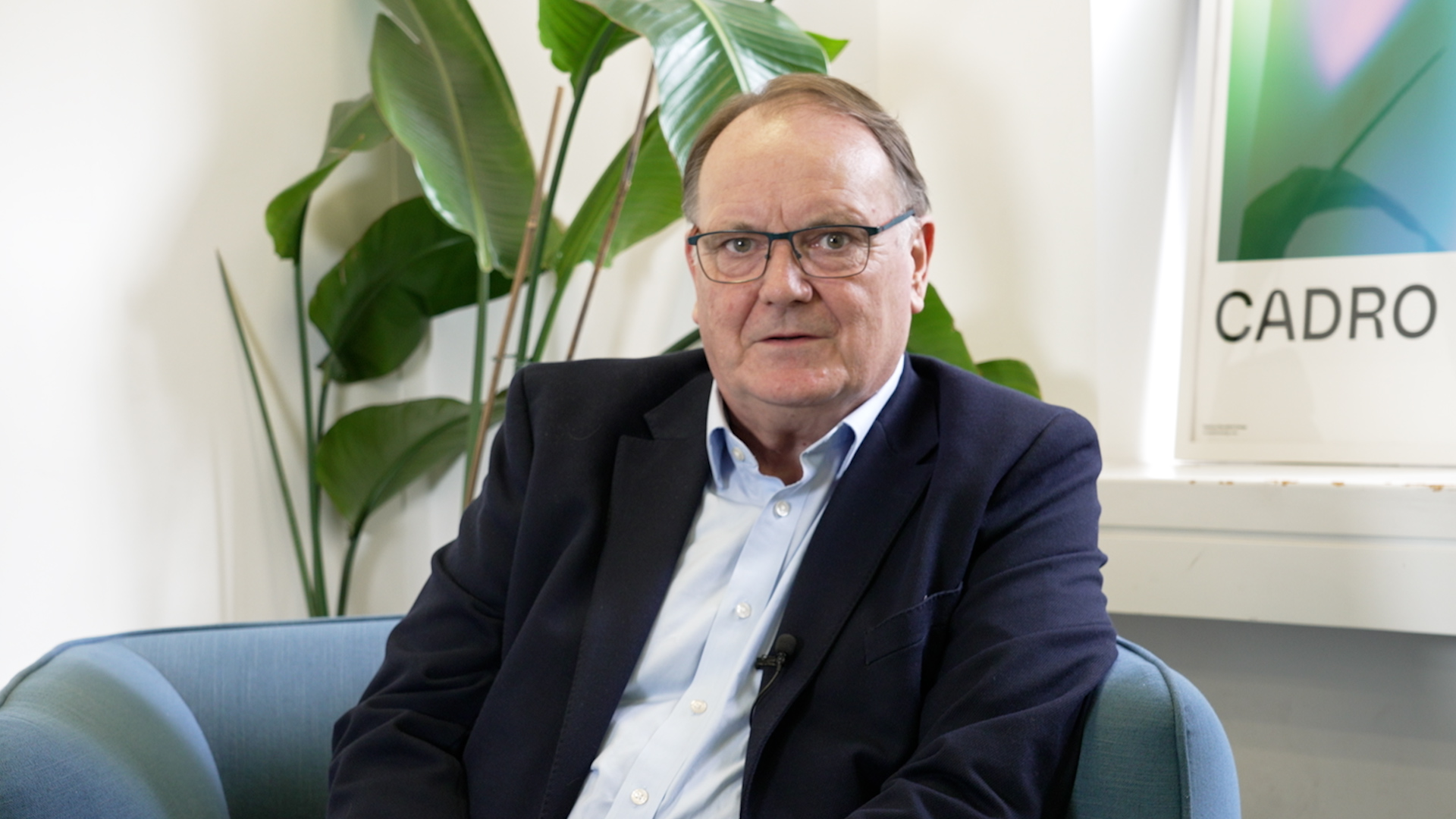
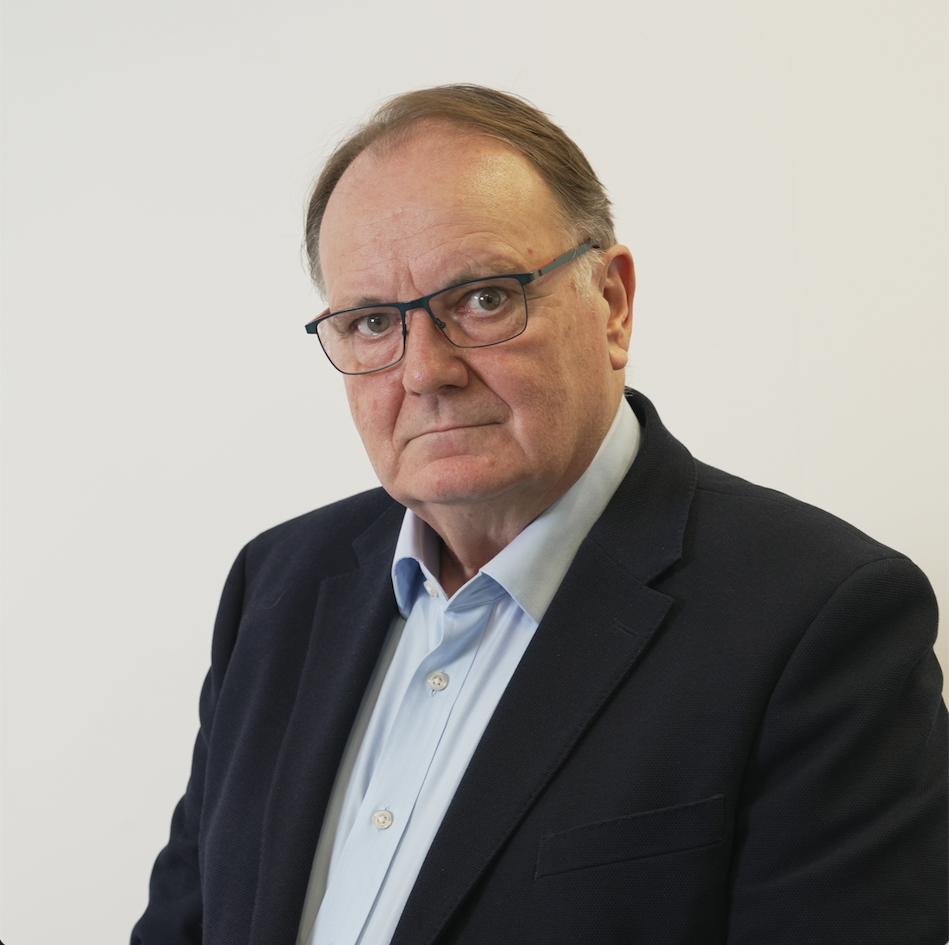
Jonathan Marriott is an External Investment Committee Member at Cadro, where he advises on asset allocation and financial markets. With a particular specialism in fixed income, Jonathan has 40+ years' experience as an investor and IC member. After beginning his career in fixed income sales, he joined Deutsche Bank in 1999 as a multi-asset and fixed income portfolio manager before rising to become Head of Discretionary Management for UK Private Clients. Later, he joined LGT Wealth Management as an Investment Manager and was quickly promoted to become the company's first overarching Chief Investment Officer. During his tenure as CIO the manager's assets under management grew from £4 billion to around £24 billion at the time of his retirement in December 2022. He joined Cadro as an External IC Member in 2023, and sits alongside fellow independent adviser Gayle Schumacher, and the company's in-house team comprising CIO David Semmens, Head of Private Markets Ajay Patel, and Co-founders Nataša Williams and Jordan Buck.
An interview with Jonathan Marriott
Hi, I'm Jonathan Marriott. I am an external investment committee member bringing my 40-plus years' experience of investment management to the committee.
My background was originally in fixed income, but for the past nearly 30 years, I've been sitting on investment committees for investment companies and on charity investment committees where we're handing money to third-party managers.
How did you become a fixed income specialist?
Well, when I started out, interest rates were double-digit. So a very different picture from the figures we see today. And at that time it was quite an exciting market.
The Eurobond market was only just starting. I previously worked for a time in private clients and on the floor of the stock exchange, when there was a trading floor, and the fixed income market sort of came towards my mathematical bent of analysing cash flow returns. And the markets were relatively inefficient, and you could exploit the inefficiencies of it.
How did you first rise to become a Chief Investment Officer?
Well, I had previously been at Deutsche Bank running their private client sterling portfolios, and, joining LGT, I actually started part-time to help support the private office team, but very shortly after they joined, they asked me to be their chief investment officer, and they hadn't had one before, which was interesting.
The investment committee was made up of a number of investors who all ran their own portfolios their own way. So it was a case of trying to draw it all together. I think we had about £4 billion under management when I joined; by the time I left, eight years later, it was £24 billion.
What is the role of the Investment Committee?
The investment committee, well, invests the money to generally come up with a balanced portfolio, balancing risks and reward. So we're trying to make a reasonable return, a real return on assets, while not taking too much risk, or taking the appropriate risk for the client's risk profile.
How is Cadro's IC different?
Well, I've sat on investment committees for nearly 30 years doing multiple multi-asset portfolios. And in terms of the asset allocation decisions, the actual decisions are very similar from different committees. I've sat on committees of 40 people where it's very hard to make any decision at all. You end up making none. I've sat on smaller committees where decisions have been made, or somebody will come up with an idea at the end of the committee meeting, and in five minutes you make a decision at the last minute. Managing that sort of team approach is quite difficult.
What Cadro does, which I think is very efficient, is that the chairman of the Investment Committee will ring round the week beforehand to discuss what people want. And the input papers are detailed and take into account people's concerns on the Investment Committee. The other thing is we all have different backgrounds and different views of things, but we respect each other. And then there's ownership in terms of the sort of cabinet responsibility for decisions that are made.
How does the IC seek consensus?
I think that we try and draw a consensus. We'll argue it through in a lot of detail. There's a detailed analysis and, in the end, one has to respect one's colleagues who have other experience. And we come to a balanced decision.
Investment committees in the past I've been on, you have the perma-bulls and the perma-bears. And when I was chairing a committee like that, you needed to be a contrarian, because when markets were down, the bearish people spoke loudest because they said they were right. And when markets were up, the bullish people spoke loudest, which meant you added to markets when they were up and sold when they were down. One tries to guard against that.
How do you see your own role on the IC?
My job is to challenge, to contribute, to come up with ideas, and then to support the decision once it's made.
How does the IC balance risk?
Well, I think firstly, you don't do anything on a month-by-month basis if you've got any investment sense. I mean, we always ask investors whether they've got an investment horizon. And if you haven't got an investment horizon of three years, then you should be in something very low risk. And probably to be an equity investor, you need a ten-year investment horizon to be pure equity.
So, you've got to look at the potential returns and the potential downside risk of individual investments, and then look at that from a portfolio point of view, because at times you have things that will go in the opposite direction.
So, you may have things in the portfolio, for instance bonds, where yields might fall when the stock market gets into trouble, which means the price goes up. Now you even hold those in portfolios when you expect to lose money on them, but they will make money if everything else goes wrong. So you're looking to balance the risks in the portfolio as a whole.
How does the IC's diversity help with our process?
Well, one of the greatest risks in markets is groupthink, where everyone is thinking the same way. If everyone is thinking the same way, then that particular view is priced into the market already and you're not likely to make very much from it.
So, having a diversity of view and a diversity of background means that we think about the markets in different ways. I come to it from a fixed income point of view. I always view the future cash flows against a discount rate. That's quite a mathematical approach to the way I think about bond markets. Others are much more subjective, and will be thinking about it differently.
What's the best advice you've learned as a long-term investor?
Don't panic. Simple as that. You should never panic. Out of the people who suffered in '87 were those that sold at the bottom of the market. Those that suffered worst in the financial crisis were those that ended up selling when the market collapsed. Those that held on made their money back fairly rapidly.
I started in financial markets in 1978. At that stage, the markets were recovering from the '74 collapse. You think the financial crisis was bad? I think the UK stock market fell over 60% in '74. I saw that indirectly because my father was a stockbroker and involved with the administration of the stock exchange at that time.
So, I've seen '74, '87, the Russian collapse in '98, the dot-com bubble bursting in 2001, the financial crisis. And it's one thing after another, then Covid most recently.
At peak, markets get over-exuberant, and what you should always remember is you top slice portfolios when they're up [take risk off by selling part of a position after a period of healthy gains]. And usually these things go wrong because nobody's expecting it. When nobody's expecting a disaster, something comes from left field, and the worst of disasters come from things that people aren't expecting.
What's the one thing people should know about Cadro's Investment Committee?
I think I would stress that the diversity of view and the way we respect each other means that no decision is made lightly. But decisions are made, and significant changes are made based on our collective view and the collective experience of the team.
I may have been doing it for perhaps the longest of the team, but there are plenty of others who have been doing it certainly for tens of years.
Disclaimer: This article is intended for informational purposes only and does not constitute investment advice or a recommendation to engage in any investment activity. It does not take into account the investment objectives, financial situation or particular needs of any individual. Capital at risk. The value of your portfolio can go down as well as up and you may get back less than you invest.