What you'll find in this article
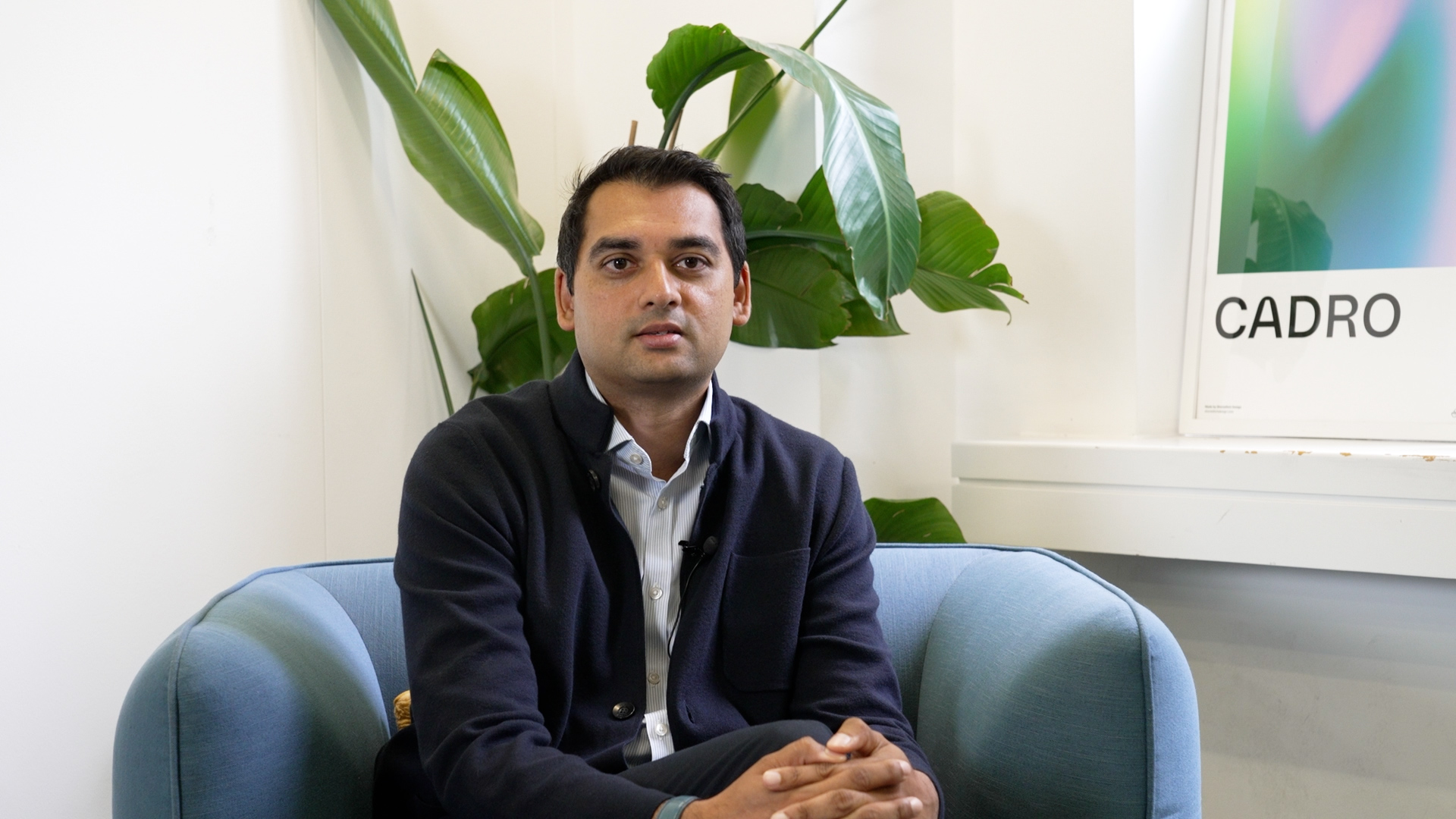
In this edition of Meet the Investment Committee, Ajay Patel, Head of Private Markets at Cadro, reflects on more than a decade in private equity, including over 12 years at M&G Investments investing in mid-market companies across Europe and Asia. He explains how Cadro’s Investment Committee balances governance with investment decisions, and why every decision is judged in the context of a client’s whole portfolio. He also covers the checks and balances that protect clients’ interests, why the committee doesn’t react to every headline, and why every Cadro employee is invited to attend and challenge it.
Introducing Ajay Patel
Ajay Patel is Cadro's Head of Private Markets, and a permanent voting member of Cadro's Investment Committee. He has spent almost two decades in UK financial services, building a wealth of knowledge across both public and private markets. After graduating from a Business Economics and Finance Bachelor's degree from the University of Loughborough he spent over twelve years as an investment specialist at M&G Investments, where he invested in global private equity and venture capital opportunities across primaries, secondaries and co-investments. He later spent time as a Senior Investment Manager at the British Business Bank's commercial entity British Patient Capital. At Cadro, in addition to his overall responsibility for private markets investments, Ajay led the design and implementation of the company's modular private markets portfolios across evergreen funds for HNW/UHNW and family office clients alike. He is Chair of the Private Markets Sub Investment Committee, and sits on the main IC alongside Cadro's Co-founders Nataša Williams and Jordan Buck, Chief Investment Officer David Semmens, and two independent External Members Gayle Schumacher and Jonathan Marriott.

An interview with Ajay Patel
Hi, I'm Ajay Patel, Head of Private markets here at Cadro.
In terms of professional background, I've always had an interest in finance, which led me to an economics degree and then I have had the pleasure of different roles in different organizations, all of different sizes and different end clients, one being a large European asset manager, the second at a government backed investor, and Cadro, where I've been from the very early days, since the company was founded just over four years ago.
How did you become a Private Markets specialist?
I started off on the public side and actually just circumstances and luck had me involved in the private market side from the beginning, more of a middle office, so non-investment role. And then as I got to know the private markets, particularly the private equity ecosystem, had opportunities to move over onto the investment side. And that's where I've been for over a decade.
Tell us about your 12+ years at M&G Investments
The focus was a global remit, predominantly, for me that was European and Asian focused. I spent time here in the London office and then had a secondment to spend some time and oversee the Asia portfolio based out of Hong Kong.
The types of investments were what are called mid-market. So, mid-market, mid-sized companies, private companies across a number of sectors. And then alongside that exposure to some smaller VC backed early stage businesses, but equally some complementary, larger, kind of, what are called mega cap companies.
How does the Cadro Investment Committee work?
So the Investment Committee meets formally, frequently on a monthly basis, and then is also equally reactive [able to respond quickly] to market conditions [as they arise].
And we will have as many ad hoc meetings as required throughout the year. I would say the primary role of the investment committee is more of governance than it is of investment and individual stock picking or funds, and our role there is to really make sure that our clients’ portfolios are constructed in a manner that is within the guidelines of the investment policy statements.
And really it's kind of those investment decisions when they arise, but more importantly, the continuous monitoring of those decisions as market conditions arise.
How does the IC make decisions?
Many of the ideas and themes are originated and debated by the Investment Committee research on individual funds or thematics is done outside the Investment Committee by the investment team.
That investment team will then work together, and that could be over a number of weeks or months to then present back to the Investment Committee, which then, again, will review the opportunity, the market timing and more importantly, I think one of the key roles of the Investment Committee is not to only look at individual investment decisions in isolation, it's to have a look and make sure whether those individual investment decisions are appropriate for clients’ portfolios based upon the risk parameters that are set.
How does each IC member’s experience inform the committee?
I would say that – I bring a different perspective, but one that is complementary to my fellow Investment Committee members. We are there as a collective. We are often trying to answer the same question, but approach it from very different angles based upon our level of expertise, our backgrounds, on whether, you know, that is not only, kind of, our roles within Cadro – many Investment Committee members sit on external or other investment committees.
It's about bringing all of those different perspectives to the table, to have a calm and constructive debate, to ensure that we are identifying the, kind of, the major risks. We are challenging any assumptions that we're, you know, that we're making and answering questions as simple as what could go wrong.
And I think, in particular, from a private market side, given my background has been on fund manager diligence, it's bringing some of those skills that is not only just looking at maybe headlines or data, but some of those softer skills around qualitative diligence, around manager alignment, operational diligence, and not just focusing on the quantitative side.
How does the IC find consensus?
I think the key component of good governance is not just trying to reach an agreement quickly. There are often debates and challenges that happen.
We are all respectful of each other's backgrounds and experience and try to do that as much as possible calmly [and in a] constructive manner. And at the end of it all, we do have a formal vote on decisions, which is then documented in the minutes.
What checks and balances does the IC work under to protect clients’ interests?
The central safeguarding is we are an FCA regulated business, and that means that we always have to ensure that our clients’ best interests are taken into account when we are operating as an Investment Committee. And as I said, a lot of that, actually, is trying not to look at investment decisions in isolation and making sure that any decision that we do take is appropriate in a whole portfolio context.
And that's not necessarily only within the public market that transcends to both the public and the private markets portfolios, for clients who do have private markets, appetite and exposure.
And the other, kind of, guardrail that is there is it's not just us Investment Committee members who are present. We have our legal and compliance officer who is there challenging, making sure that any decisions that we are intending to make fits within the clients’ best interests and ensuring that we're, kind of – not only is it the client, but being aware of requirements that the regulator has put on us.
[NB: Cadro’s Chief Legal and Compliance Officer, Edward Heaton, provides an independent challenge to general discussions during Investment Committees and oversees the company’s day-to-day adherence to Cadro’s regulatory and governance requirements. While he and other staff members attend Investment Committees to offer wider perspectives and gain knowledge of key market events, responsibility for all investment decisions lies solely with the IC’s six permanent voting members comprising Co-founders Nataša Williams and Jordan Buck, Chief Investment Officer David Semmens, Head of Private Markets Ajay Patel, and two independent External Members Gayle Schumacher and Jonathan Marriott.]
How much do details and data matter for the IC?
I think the detail absolutely matters, but I think it's equally important to also take a step back and reflect the bigger picture of why. Sometimes the simpler questions are, you know, equally as important to then back up with the detail.
One thing that we are very mindful of is we read the headlines, we do a lot of reading outside of it, but that doesn't mean that we will naturally have to react to every headline that is there. Markets have been very volatile. There have been a number of headlines across both public and private markets. Our role is to look at the evidence, the data and come up with an informed decision.
And that decision may be as simple as: we're not going to make a decision or any changes to our portfolio, and a lot of that is going to come from the data in the detail.
What should everyone know about the Cadro IC?
I'd say two things. I'd say, the first one is: slide two of every single one of our Investment Committee packs is a reminder of what our investment values and principles are, which I always have a read through.
Not because I've forgotten. It's there to kind of set you into that mindset, as you read through the Investment Committee pack that David [Semmens] and the investment team put together each month. The second one is that maybe not many people are aware of. We actually encourage the entire – all employees – to join each Investment Committee, for two reasons. I think it is informative for everyone.
We operate an inclusive policy and it also allows, whether that is compliance, legal, client advisers, who are speaking to clients all the time, to ask questions as well and challenge the Investment Committee.
And I think that is something that maybe clients are not aware of, and maybe just think it is six people in a room on a monthly basis. There are, you know, that debate and that constructive debate doesn't only have to be within the voting members of the IC. There are, you know, different perspectives from all different members of the organisation.
Disclaimer: This article is intended for informational purposes only and does not constitute investment advice or a recommendation to engage in any investment activity. It does not take into account the investment objectives, financial situation or particular needs of any individual. Capital at risk. The value of your portfolio can go down as well as up and you may get back less than you invest.