Most conversations about succession start with the assets: the property, the portfolio, the trust, the business.
This one starts somewhere else. Research suggests the vast majority of the UK's wealthiest families experience disagreements over wealth, yet conversations about succession and long-term planning are routinely avoided, usually to prevent friction.
The irony is that it is this silence that creates friction later. With an estimated £7 trillion expected to pass between generations in the UK by 2050, the transition is well underway, and the families who navigate it best are rarely those with the most sophisticated structures.
Rather, they are the ones who have done the human work first: naming values, preparing recipients and treating wealth less like a pond that accumulates and more like a river that flows.
In this webinar, recorded with our partners at Hotel Philosophy on July 17, we explore the psychology and rituals behind transferring wealth well, and close with some principles any family can apply.
What you'll find in this article
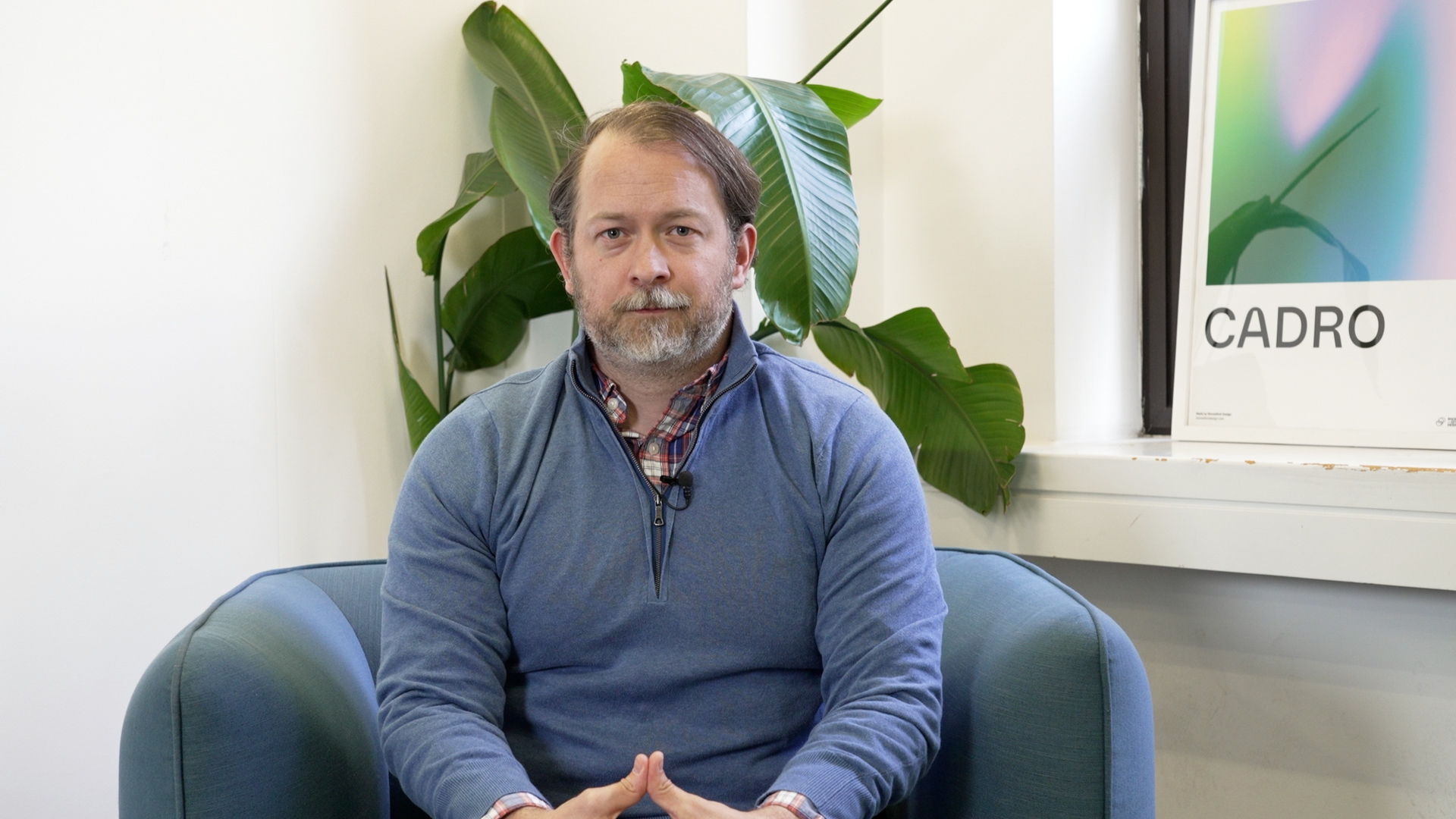
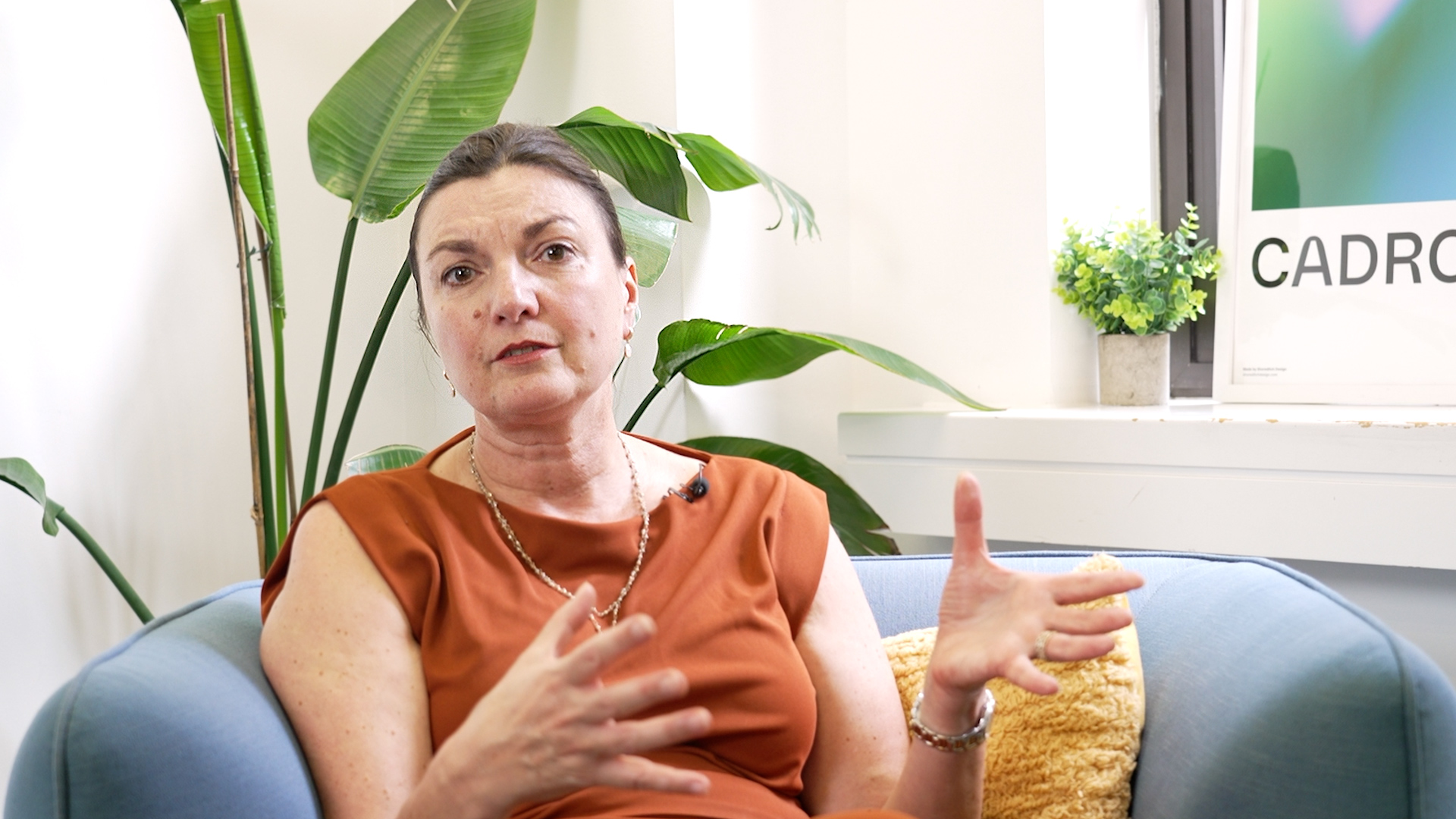
The largest intergenerational wealth transfer in history is underway, yet most families remain unprepared: not for lack of tax planning or legal structuring, but because the human conversations have never happened. In this recorded webinar, Cadro Client Adviser Kathleen Tatham is joined by philosopher Robert Rowland Smith and ritual practitioner Miriam O'Connor, co-founders of Hotel Philosophy, to explore what it means to transfer wealth well. Together they examine what wealth really is, why transitions create friction, what makes a good ancestor and a good recipient, and the five practical principles families can use to prepare. The full video and transcript are below.
Disclaimer: This article is intended for informational purposes only and does not constitute investment advice or a recommendation to engage in any investment activity. It does not take into account the investment objectives, financial situation or particular needs of any individual. Capital at risk. The value of your portfolio can go down as well as up and you may get back less than you invest.
Transferring Wealth Well webinar transcript
Kathleen Tatham: Good morning and welcome. I'm Kathleen Tatham, a client advisor at Cadro, and for those of you who haven't been introduced to Cadro yet, we are a modern discretionary investment manager based in London and primarily focused on high-net-worth and ultra-high-net-worth private clients.
And increasingly, we seem to be providing family office services to families navigating exactly the type of questions we're going to explore today. I'm very, very lucky to be joined this morning by two colleagues who are from Hotel Philosophy who are wonderful people whose thinking I genuinely find incredibly insightful and useful, and whose work really sits somewhere where most financial services firms and most financial services conversations never really reach.
So, Robert Rowland Smith is a philosopher and a former prize fellow of All Souls College in Oxford. He is also a selling author and currently writing another book, and one of the UK's leading practitioners of systemic constellations, which is a method that reveals hidden patterns in families and organizations.
So, he has really spent his career asking what it means to live truthfully, and more recently how to handle wealth truthfully. So, welcome Robert.
And Robert is joined by his Co-founder of Hotel Philosophy Miriam O'Connor, Miri. And her work really sits at an intersection of ritual storytelling and systems thinking. So really helping people and families navigate major transitions.
So, bringing them with us this morning is hopefully going to shed some real light into this transition conversation that we're going to have. And I don't think it really sits typically in a normal wealth management conversation. And I think that's why we, as Cadro, find this a really interesting subject. So Miri and Robert, a huge welcome to you both.
Robert, I don't know if you want to give a bit of insight into who Hotel Philosophy are before we get into it?
Robert Rowland Smith: Sure. Thank you, Kathleen, and hello to everybody.
Yes, first of all, thank you to Kathleen and her colleagues at Cadro for having us along today, it's a pleasure to be with you. And really, just to reiterate what Kathleen says there, Hotel Philosophy is a business that Miri and I set up for wealthy individuals, family offices, to look at all those issues that go beyond finance.
So, issues to do with human dynamics, emotions, conflict psychology, and so on and so forth. And today, I'm going to be talking a bit about the psychology of transferring wealth. And Miri, who runs our ritual practices and ceremonies, she's going to be talking a little bit more about the rituals around marking transitions. So we feel that we partner with Kathleen by adding something a little bit different to the kind of things that they do so brilliantly well.
So thank you, Kathleen.
KT: Welcome both of you.
So, I think before we get into it, just to say that there will be some time for a Q&A reflecting on the conversation, but just to make everyone aware of how it works. So, if you're thinking of something whilst we're going through the conversation, there should be a Q&A button on the bottom bar and a pop-up will appear and you can type the question in and it can be anonymous if you'd like it to.
And if you have any trouble Emily my colleague is with me here, and she'll be responding to any emails if you're struggling with the Q&A. So hopefully we will have some time for that at the end.
But from my perspective, and before we jump in, I suppose setting the macro context of why we're discussing this today. I think one of the things I read recently in a Cambridge research report is really this transition, and succession is one of the most urgent topics in wealth management or private wealth at the moment.
I think it's estimated that around £28 trillion pounds will pass from the Baby Boomers to Gen X and Millennials in the coming decades. And in the UK alone last year, over £1 trillion pounds transferred with a further £7 trillion expected to transfer or pass down by 2050.
So this transition is very much well underway. And what we're seeing is most families are slightly under-prepared, and not because they haven't had good tax planning or advisers from that perspective, but because there are conversations that haven't yet happened. And I suppose it's the human ones, the ones about identity, the ones about values and wealth and what that wealth is really for. And those conversations are often a bit more difficult to start.
So today we wanted to sort of break down this subject matter and sort of give you some practical insights, basically from a philosophical and learnings perspective. But typically we'll start off with discussing what wealth is.
And I suppose you, as they, usually expect a conversation about succession typically starts with assets: the property, the portfolio, the trust, the business, etc., etc. But we want to start somewhere else today. And we'll start, Robert, from your perspective and then we'll hand over to Miri.
But what really is wealth when we talk about wealth?
RRS: Yes, thank you Kathleen, thank you very much.
I mean, it's a strange question to pose in a way, because I think for most people, in answer to the question of what is wealth, they simply say it's money. So why make things more complicated than that?
But as Kathleen and her colleagues know very well, as soon as you start talking about wealth, you get into the question of values. What is wealth to one person? Is something different to another person in English. For those first language English speakers on the on the line today we have this phrase, “your health is your wealth”.
You may have heard that, it’s something that my mother often tells me. So that's one way of describing what wealth is. It's not money, it's health.
But Miri and I have been thinking about this, as I say, from a slightly more philosophical point of view. Miri will talk about this from a more kind of ritual and ceremonial and historical point of view. But one interesting way into it is to think about the origin of the word wealth.
Now the title of our seminar is Transferring Wealth Well, which is a bit of a tongue twister, but it also contains a linguistic secret, because the word wealth actually comes from the word, “well”, to be well, it's connected. So somebody who's wealthy is somebody who is well. And wellness in turn, comes as a word from the idea of “what you wish for”, it comes from an ancient root.
So wealth comes to you when you get what you wish for. However, we also know the phrase, “be careful what you wish for”. Sometimes what you wish for is not what you need. So our working definition of wealth is that wealth is what makes you well. It's not necessarily what you wish for because what you might wish for – I mean, I know Kathleen sits over a Ferrari showroom in Berkeley Square in London – so every day Kathleen goes in and wishes for that Ferrari.
But is that what's going to make her well? Not necessarily. It's not necessarily what's going to make us well. So that's one way of thinking about wealth, which I think is a very nice way into this “wealth is what makes you well”.
And wellness takes lots of forms, physical, mental and so on. Just one more thought before I hand over to Miri, because she's going to be talking about rivers and ponds and wells and streams, because water is a very interesting way of thinking about money. If you look at the painting on the screen, if you can see that those of you who have got the screen going, I think it's hard to tell whether we're looking at a river or a pond in that picture. And I think that raises an interesting question about our definitions of money.
And broadly speaking, broadly speaking, we have two definitions of money. We have a pond definition, which is money is capital, something that accumulates. And we have a river definition of money, which is something that flows. And a flow is about exchange. And in the work I do, Kathleen mentioned this thing called systemic constellations, which is actually a form of therapy.
One of the key tenets there is that we must always find a good balance of give and take, of exchange in our lives, and then actually, things go better when we're in a state of flow, like a river, rather than in a state of holding things like a pond.
So even if we are recipients of assets, significant assets such as Kathleen were speaking about, it's better to think of those assets less as a pond and more as a river. In other words, how can we make things flow and enable the good give and take?
Because our lives as a whole are likely to go better if we do. So some initial thoughts there.
KT: Yes, I think Robert that exactly, yeah, what a brilliant description.
And I think it leads to Miri’s concept of wells, and Miri can even allude to the fact that she searches for wells of a weekend. So, let’s introduce her thoughts on the matter.
Miri O'Connor: Yes, so I’m going to draw on some examples from nature.
On wealth, we often think of wealth as accumulation. The more we possess, the wealthier we come. But nature tells a different story. So a tree isn't wealthy because it hoards its nutrients. It draws from the earth, it transforms them into life and shares them through fruit, shade, and seeds.
And a river isn't wealthy because it keeps its water. It nourishes everything. It passes and everything it passes nourishes it with minerals in return. And a well isn't wealthy because nobody drinks from it. Its purpose is fulfilled when it gives water.
And in the Irish tradition, there's a beautiful story about the well, of the mystical well of wisdom. And around it grew nine hazel trees whose nuts carried all the wisdom in the world. As the nuts fell into the well, the water carried the wisdom out into the rivers, and eventually it reached everyone.
So, the wisdom was never meant to stay within the well. Its purpose was to flow, and perhaps wealth is much the same. And in early Irish thought, abundance wasn't about ownership, it was about the right relationship. The ideal king wasn't judged by how much gold he possessed, but by whether the land flourished under his care.
Were the fields fertile? Did the cattle thrive? Did the rivers continue to flow, and did the people prosper? What if the land became barren? It wasn't just seen as bad luck. It suggested that the relationship between the ruler, the people and the land had fallen out of balance. And perhaps that's a very different way of thinking about wealth, that real wealth isn't measured by what we own, it is measured by what flourishes.
Because we are here. Money is just one expression of wealth, but so is time. Knowledge, stories, land, relationships, health, beauty, wisdom and trust. So the question isn't, how much do I have? It is, what flows through me and into the future?
KT: That's beautifully put I think, insightful, and I think the analogies are really useful from a finance brain trying to sort of de-programme and look back or look away, and sort of think of what is it actually that we want, what we want to achieve, what do we want to share, and how do we get to this point?
So, I think to move straight on to the fact this wealth then has to transfer, in the analogy of the river. And thinking about what a transition is, I think I read another research piece saying 90% of the UK's wealthiest families experience active disagreements over wealth, yet the conversations about succession, governance, long term planning are routinely avoided, and most commonly because they want to avoid friction.
And obviously, the irony is that it's that silence that creates the friction later on. So, Robert, you've had many years thinking about having certain conversations, and some of them feel, from my perspective, almost dangerous to begin when we talk about transition, what are we really talking about?
RRS: As you say, transition can cause friction.
And I've mediated many, many conversations between families and sometimes their advisers around transition because it's a point of tension. It's the point of transfer. And that's where lots of family dynamics or business dynamics come to the fore.
So just to reiterate what you say there, here's a picture of Queen Victoria receiving the throne. It's a terrible painting in my view. But there you go. It's a historical record. The idea of monarchy is really, in a way, to get around the tensions involved in transition, because it says we already know who the air is going to be.
We knew a long time in advance, and the moment the king is dead, there is a new monarch appointed. So hence the phrase, “The King is dead, long live the King”, or, “The Queen is dead, long live the Queen!” The whole idea is that you minimize transition friction.
So the monarchy is almost set up precisely to avoid transition difficulty. Unfortunately or fortunately, most families do not have a single natural heir. Normally money is passed down to several siblings, maybe siblings and their partners, maybe nephews and nieces, and so on.
And one of the first questions I always ask is, well, what is the family? And from that, all sorts of tensions or difficulties or questions can arise. And I think the tensions arise because the moment there's transition, there is this anxiety around loss and gain. Who's going to lose and who's going to win. And that can be on the part of the ancestors giving things away as well, who can sometimes hang on a bit too long as we'll come on to you later.
And as a result, those things can be smooth or difficult, those transitions. But I think whatever, whatever goes on in that transition, we have to recognise that it's an effect of time. People get older. That is just something we cannot avoid. And there is something, I think, fundamentally humbling about the fact that time is stronger than any of us. Transition is inevitable.
So as you say, Kathleen, it's better to face it rather than avoid it. Basically, it's a non-negotiable.
KT: Okay, that makes a lot of sense. And I like the analogy of the Crown, so to speak. Even though there's not much debate of who's taking over. Miri, from your perspective, I know you wanted to draw sort of on the analogy of the moon and the fact that it is transitioning. And so I'll let you take over.
MOC: Yeah, thank you.
So transition is often misunderstood as simply moving from one thing to another. But in every culture throughout history, transition was something to be marked because people understood that we don't just wake up as a different person, we have to cross into that new identity.
And for thousands of years, we've created rituals around life's great thresholds. Birth, coming of age, marriage. Inheritance in the past. Well, now the appointment of a new leader, like a king, and the changing of the seasons. And of course, death.
But these weren't just celebrations or ceremonies. They gave people permission to acknowledge what was ending before they embraced what was about to begin. So without that pause, we can carry our old identity into the new chapter, which isn't helpful.
And so today, many of these communal rituals have disappeared. And yeah, our lives are still full of these transitions. Like starting a new business, selling a business, retirement, receiving an inheritance, becoming a parent, moving home, loss, illness, recovery. And these moments shape us. But we move through them, often alone and through Hotel Philosophy I work with one of humanity's oldest visible cycles, the moon.
And every month, the moon reminds us that life isn't static. It waxes, it reaches fullness, it wanes, and it becomes dark right before it starts to begin again.
Like now we're in the new moon phase. And so by consciously marking these smaller transitions, like the moon phases, we become more able to navigate the larger ones.
KT: Very well put. So it's breaking it down, really the transition can feel enormous. So breaking it down to these smaller phases can be a lot more manageable.
I like the way that goes. So I think now we've sort of got the wealth, we've got the transition. But these role players I suppose on both sides in the giving and receiving. So when we talk about it sort of from a financial perspective, we talk, really, about technical exercise of passing stuff.
But really it's a relationship exercise so to speak. So when we talk about the ancestor and the donor, what does it mean? What makes a good answer?
RRS: Yeah, it's such an interesting question isn't it.
I've put a better painting here at this time. This is by Thomas Gainsborough. You may recognise that, some of you, and he often painted wealthy families in the 18th century.
Really considering this idea of assets. And you can see here the father essentially pointing out towards the family estate with his wife and their child. And I think it's an interesting picture because it says something about inheritance and transition and what a good ancestor looks like.
Actually, in in a sense, that's what Gainsborough is portraying here. So what does make a good ancestor? I think the first point is that they do accept the inevitable. I'm obviously not going to name names here, but I'm working with one very wealthy family business, huge, huge assets where the – let's call him the patriarch – who's now in his late 80s just won't let go.
He's just hanging on and not allowing transition to happen. And that's causing a huge amount of delay and frustration among the other participants really in that transition. So I think accepting the inevitable perhaps a little bit back to my point about time and what Miri was just saying there about transitions.
I think that's the first thing, you know, things are going to change. They're not going to stay the same. And once we accept that, things will loosen up a bit. What else makes a good ancestor? I mean, I don't know if any of you have had the experience of inheriting something where a will has been poorly written, or there are two wills or contested wills, I'm sure, Kathleen, that comes up in your work occasionally as well.
So, an ancestor essentially leaves a recipe for chaos among those who come afterwards. You know, because there's unfinished business. And sometimes that's done just simply by mistake. And sometimes it's done because the ancestor wants to be remembered.
And so they leave chaos as a way of keeping their name alive. The last, and I've seen that, by the way, in this practice, I do family constellations, where the ancestors, in a sense, don't get out of the way.
So part of a good ancestor is somebody who gets out of the way. And finally, this is perhaps a slightly wistful or fanciful phrase: a Good ancestor is somebody who smiles on those who come after. I mean by that, somebody who actively gives their blessing to what comes afterwards isn't just sort of grudgingly saying, okay, well, here's the money, get on with it, but actively wants the people after them to thrive and live at least as good a life as they have lived.
KT: I think that makes a lot of sense, and I suppose if you've prepared for it and you can drill down or distil exactly what it is that you want your heirs to understand about the wealth, then you can smile on those who come after them, knowing that they understand.
And so, yeah, to pass on to Miri, I think you've got a picture of a tree here. And I always think of this from economics and finance lectures way back when. But it was a sort of basic analogy of the tree being capital and the fruit being the income.
And so I'll pass on to you now to think about and bring this to life, really, so what do you think makes a good ancestor?
MOC: So, most people hear the word ancestor and think of someone who has already died.
But the truth is, we're all becoming someone's ancestor, and perhaps not even biologically, but certainly spiritually. Every choice we make today is creating someone else's inheritance.
And I spend a lot of time restoring old village wells, and I often think that the people who built this well will never meet me, but they dug it anyway. And they planted oak trees whose shade they would never sit beneath. They protected the springs and rivers, that would give life to generations they would never know.
And they cared for the land as if it had been borrowed and not owned by them. And that's what a good ancestor does. They ask, will someone I have never met thank me for this?
So the best ancestors don't just leave us more, they leave us better.
KT: And leads us into the concept of wealth and wellness and being well. So that makes perfect sense I think. Now, flipping the coin I guess and looking at the other role player because typically in life you can be both through the phases of being the ancestor, but you can also be the recipient. And I suppose the heirs’ experience is one that the financial services industry really doesn't delve into. And from your perspective, Robert, what does it mean to be a good recipient, a good heir?
RRS: Yeah. Again, I mean, I find this to be an absolutely fascinating question because I don't think it's simply about, you know, receiving the money into your bank account or taking the cheque or whatever there is.
There is a good difference between a good and a bad recipient. So what makes a good recipient now?
And by the way, the photograph here is from a – it's a 19th century painting again, but from Greek mythology about the shower of gold raining down from the gods on the woman. They're sort of readily receiving the coins into her hand.
The question I think that painting poses, and perhaps one for us all to ask, is actually whether we are ready. Now, I was working with a family recently with four siblings who were in receipt of a huge amount of asset transfer, let's call it, from a father who'd started up a very successful financial services business as it happened.
Of the four siblings, three were, let's say, balanced, successful, competent individuals. But one of the siblings was not. He had all sorts of problems, which I won't go into, but you can imagine perhaps some of the difficulties an individual man in their early 20s might face.
The father, and indeed the mother, were very keen for the money to be distributed as equally as possible, you know, into four quarters, essentially among the four siblings, although they all knew that should the younger man receive this money, it would be spent on entirely the wrong things and things that would actually continue to make him less well, effectively, to use the language we've done today.
So the question there is, is he ready? Are we actually ready? Just because it's fair to transfer money equally to your four children, yes, does it make it right? So, there's a difference between rightness and fairness.
And that's putting it slightly philosophically. But in practical terms, are we sure the individuals receiving money can handle it? Actually, it's a theme that comes up in other contexts when we think about are we people who dream of being successful, but are you actually ready for success? Do you have the network in place? Do you have the strength of character not to be swayed into making poor decisions?
So I emphasise this point because I think it's overlooked. Often it's not just about receiving the money, it is about preparing yourself psychologically, emotionally, and so on for the receipt of that money.
And actually, and I'm sure you've come across this, Kathleen, in your work, when you receive a large amount of money, it can change your relationships with other people.
KT: Oh, absolutely. I mean, just to jump in from our perspective and this fact or this figure was confirmed by a UBS study, but 90% of heirs change their wealth manager after inheriting. And I think that's telling.
And it's not because of investment performance or fees or anything like that. It's really just because often the next generation was never brought into the room early on. And so yeah, I know exactly what you're talking about.
RRS: Yeah, it's very interesting. I mean, I was working with a woman who's around 30 recently.
She has this beautiful flat in central London, and she was telling me, you know, her friends come round who don't have the same assets as she does, and they all say, gosh, you know what a beautiful flat. You're lucky. You know you must be being paid well at work or whatever.
And of course, she doesn't want to reveal the source of her wealth and essentially has to create a story around it in order to disguise the money. And she's conscious that she has a set of friends who don't know about where the money comes from, and a set of people around her family who do know where it comes from.
And she's sort of living, I mean, it's an exaggeration to say that she's living a double life, but she's only got two narratives on the go, and she finds that not easy to manage always because she doesn't want to alienate her more, let's say, more normal friends from her because she values their friendship.
So it's not insignificant. Just a couple more points here, using the gift. Well, I put this phrase down because I think, you know, gratitude is a is a term we often talk about in terms of receiving wealth and saying thank you.
In my view, the word thank you is not sufficient. I think the phrase to be used is: “Thank you, I will use it well”. So “thank you” is just shorthand for a longer phrase. Because, you know, Kathleen, I know you have young children. I've had young children. You give them presents at Christmas, they play with them for five minutes and they never look at them again.
So, they may say thank you, but they don't use it well. And I think the using it well is a better form of gratitude than just acceptance. So using the gift well. And then, finally, and I think, Miri, you were hinting at this in what you were saying earlier, it's aiming to create more.
I mean today is a significant day in UK politics because Sir Keir Starmer is stepping down as leader of the Labour Party and Prime Minister. We know Andy Burnham is taking over here. And one of the things in terms of legacy that Starmer is keen to say is that I'm leaving the country in a better place than how I found it.
Now you can debate whether that's true or not. Of course you can. But the ambition, nevertheless, for a leader of a business would always be to try and do that, leave the company in a better state than you inherited it.
And I think a similar principle applies here, Kathleen, you know, can we do more with this asset? Can we make it, to use your analogy of the acorns, can we make the make it fructify, can we make it grow more than the amount or the wellness that was given us in the first place?
KT: Precisely, and that recipient, then, if used well, becomes a donor eventually to hand on to another recipient if you carry on with the story. But Miri, from your perspective, what makes a good recipient?
MOC: Yeah, so carrying on from Robert, really, we often ask, what am I going to receive? But the more the more important question is: How do I receive well?
And throughout history, there were people whose role wasn't to create the abundance but to care for it. And I've become fascinated by the figure of the well maiden or the custodian of the well. And she wasn't just someone who collected the water. She protected the well, and she understood that this water belongs to everyone. She ensured that it remained clean for those who came after her. And she wasn't the owner, she was the guardian.
And I wonder whether receiving an inheritance, a family business or a great wealth asks something similar of us. So the question isn't: What can I do with this? Perhaps it's: How can I care for this, so it continues to nourish others?
And I run tea ceremonies, and we often speak about what is a good recipient. So the tea isn't just consumed, it's received. You notice the aroma before you drink. You taste each ingredient. You recognise the people who planted the herbs. So, receiving becomes an act of gratitude. And perhaps wealth asks the same of us.
So money, land, knowledge, a family business. None of these truly belong to us. For our time here on earth, they’re placed in our hands. But the question is not whether we deserve to receive them. The question is whether we can become worthy custodians of them. So perhaps a good recipient is someone who leaves the well cleaner than they found it.
KT: I think, that’s an excellent analogy. And it's bringing new life in a way that to the next person, which I think is really nice.
So thank you for that. That makes a lot of sense, I suppose, from our perspective. And I'm going to stop sharing now. But it will help to relate this to the audience in a more practical sense than thinking about it, right.
We understand, we’ve broken down this sort of long phrase, but is there a way, I think, that we want to sort of pull this together, that practically in all our lives, whether we're the donor, whether we're the recipient, whether we are providing advice from a financial services, a tax, or from a topical perspective, I think we could probably think through our conversation, drill this into sort of five principles to mess with.
Guidelines, I guess, are things that we should consider when we're having this conversation or trying to digest these concepts. And so from my perspective, I'll start with one. And we can debate whether or not you agree. But it's really starting with the value before you start with the asset.
So before you start planning a structure and design all the tax and the legality of it, it's sort of thinking from a family's perspective, what is this wealth for? What do we believe about it? What are the obligations that it carries? And then these answers will sort of help the structuring become a lot simpler. Would you agree?
RRS: Yes, I would agree. And I think Mary and I are both sort of interested in this idea of making the conversation explicit in a way that's sort of our main message here, Kathleen probably, isn't it?
It's like you said at the beginning, don't wait until the transition event and then hope for the best. Prepare for it and prepare for it through having the conversations and the conversations, as you say, there are probably best based around values. Essentially what really do we value here? What matters to us? Where do we diverge on the values and where do we converge exactly?
KT: And then I think, Robert, you'd like this one, as you said, but it's naming the invisible.
And what I mean by that, really, is that every family would carry a story about whether its beliefs, its fears, its loyalties, dynamics, all of these travel sort of alongside the event. And there's patterns there that we need to expose, I suppose, and put our finger on. And it's not only from a therapeutic exercise, it's actually a practical thing to do.
RRS: Yeah. I'll give you another example of a family I was working with a couple of years ago. Two sisters inherited a large amount of money. One of them was always the successful outgoing one, and the other one was the quieter, more apologetic one, really.
And it caused a real tension between those sisters, because that was the unspoken dynamic. Everybody knew that was going on, but because they received equal amounts of money, there was tension because the older sister effectively felt she should get more, because she was the more, you know, she was the more outgoing, the more successful person with a more apparently successful life.
So actually naming the invisible there, which was kind of visible to everybody was key to that. Actually, the invisible dynamic here is one person throughout life having sort of taken more of the limelight than the other, and the other person sort of allowing that. So two parts to the whole, really.
KT: I think that's very true.
And I suppose we've sort of already said this, but it's the sense of urgency, but really thinking about having these conversations way before you need to, specifically when the conversation is thrown on you when there's bereavement, illness, a tax deadline, something like that, that causes the sort of reason to act.
But the earlier you can have these conversations, and I know I've dealt it, but bringing heirs into conversations with wealth managers, with tax advisors, with legal people, asking them and bringing the conversation and breaking it down into the smaller sort of pieces can really be beneficial when the actual transition occurs.
RRS: Yeah, and of course, I agree completely with that. But what struck me as you were talking there is that conversations are also a bit of a skill.
They're not just, let's get around the kitchen table and, you know, repeat the same old dynamics. I think maybe there's something we can come back to another time about actually how to have those conversations so that they are skilful and not just a kind of a rerun of the existing family dynamic.
KT: No, it's exactly that. It's not an easy place to start.
And I suppose it's, as Miri said earlier, it's breaking them down into smaller little conversations and trying to get those and then looping it all together. And then I think, I mean, we've spoken about this in the sense that we've spoken about the recipients and what it means to be a good recipient, but it's this preparation for the recipient.
So preparing the recipient, not just the structure. So obviously a well-drafted will and a structured, tax efficient portfolio which means really nothing if the recipient is underpaid, whether that's psychologically, practically or from a relationship perspective.
We need to invest in them from a recipient handling point of view and giving them the skills and that gratitude, so that when they receive, they feel that they are the best possible position to receive and understanding of what that custodianship means.
RRS: It's interesting, as you were talking, I had a new thought. It doesn't happen to me very often, but preparing the recipient, absolutely. But transition is a process isn't it. And I think when you were talking about the moon, Miri, maybe that's what prompted this thought.
There's the preparing, there is the transfer. But then there's also the period after the transfer. Now, I know you do this in your work in any case, but I think conceiving of this as a sequence in which the handover of wealth is just one moment in a longer story is important because also you need to have the conversation after, don't you? You need to say, okay, and how is this playing out now? What's going well, what's going less well.
MOC: And the rituals and ceremonies can really help someone prepare for that stage where they're receiving, because psychologically it will get them into that state of mind where they’re going to be ready in that moment.
So that's where ceremony comes into it. And you see it like with the crowning of the king, like there was a long buildup to that ceremony where he got into the frame of mind of that. And you can do that in a, in a shorter way through recipients receiving.
KT: I think that's really good advice. And I think we sort of, if from a sort of religious point of view, everyone's used to go to church and going through ceremonies and that sort of thing, and that’s sort of fallen away in society to a large extent. And it's bringing back some element of ritual that gives you grounding and control, even if it's subconscious, that you are in this transitional phase.
So it's useful. So, I think the last thing I was thinking about is really we have a psychologist, maybe we have friends and family. We have tax advisors, wealth managers, everyone giving all of this advice. But really it's the oversight, the sort of wraparound of who's going to own this whole process and make sure to keep everyone honest.
And I think we spoke about it other day, but I wanted to call this person the Oracle, because it's that they really need the person to hold the whole picture together and to make sure that everyone's kept honest and to keep the transition and the conversations flow, to check it. Because if someone’s not making sure it's happening, I’m not sure it will. We all have really good intentions, but to act on it and to take the lead, it would be useful, I think, to have someone who has that responsibility to own the process.
And perhaps that's the donor. But as a recipient, if your donor is older than you, maybe you know and you know yourself, you need a lot of preparation in order to be a good recipient. It's getting that oversight. And I suppose that's where you guys help a lot of people. And it's recognising that that relationship can be really beneficial in something like we're discussing.
RRS: Well, yeah, I mean, of course I'm going to agree massively with what you just said, Kathleen – I completely agree. And although that that role of the owner of the process can be played within the family or within the business, it can also be played by a third party, whether that's a Cadro or a Hotel Philosophy or somebody else.
And of course, there are pros and cons on both sides, but I think naming that role I love the word oracle. I can see you as an oracle, Kathleen, for sure that would be would be brilliant in point of value. So thank you.
MOC: And also I do a lot of work with people who are passing on. So work as a soul midwife or death doula, you are that kind of oracle where you oversee the process and you help everyone involved and you can explain to them what's happening.
And there is this school of thought that in death the biggest transition, but in all transitions the elements are involved. So that so earth, water, fire and air. And when you see it through those, through that, it becomes something that is actually very natural and it becomes easier to process the transition.
KT: I think that makes a lot of sense.
Okay. Well, I think we haven't got much time left, but I've got a few questions. I think one of my colleagues has one. Quite a good question, but I'll open it to all of us. But how do differences in values and financial literacy across generations show up in conflict around inheritance/wealth transfer conversations?
RRS: Is the question how do they show up?
KT: Correct.
RRS: Yeah, and they do. And we know that people of different generations have different agendas, don't they?
So again, I mean, not to keep on quoting these examples, but I think yet another client where the older generation had invested in certain things that the younger generation were very keen not to invest in.
I think it goes back to your phrase about transition. Instead of lurching from one system to another, is there an intermediary phase that we can go to where people are just because you're not going to resolve difference in values overnight, you're just not going to do it. But is there a middle ground where people can compromise? In other words, a middle phase that people can go through during a transition. And I think that's often a helpful conversation to have, you know, yes, there's a conflict here. Instead of making this a choice between A or B, is there a C that we can go to? We're all just giving a little bit of ground.
KT: Oh absolutely. And it’s recognising that, as conversations do, conversations are longer periods things, and they start in one area, and yes, you want to get an answer or when you come in, you come in with an agenda. But that conversation can go down many different paths that eventually get you there.
So I think it's just breaking things down which is the really useful thing.
But from my perspective, I just wanted to say a huge thank you to both of you for your time this morning. It's been an absolute pleasure, and it's really lovely to have a conversation that typically our financial services industry would never really have, and I think, broaden our mind of what we were doing here.
What is this wealth that we're investing for and how do we serve the recipient? How do we serve the donor, and how can we be helpful whether it's being the oracle or not? It's recognising that one needs that.
So from my perspective, thank you so much. And to the audience, if any of these conversations I've resonated with you, we'd love to chat. So please reach out to us and I can put you in touch with Miri and Robert or ourselves. But thank you, Robert. Thank you very much, I hope you enjoyed it too.
MOC: Thank you.
RRS: Yeah, thank you for holding it all so beautifully well, Kathleen.
KT: My pleasure. Thank you, everyone for joining us and hopefully see you all soon.
FAQs
What is the great wealth transfer?
The great wealth transfer refers to the movement of wealth from the Baby Boomer generation to Gen X and Millennials over the coming decades. In the UK, an estimated £7 trillion is expected to pass between generations by 2050. It is one of the most significant financial and social shifts of our time, and one most families are under-prepared for.
Why do wealth transfers fail, even with good tax and legal planning?
Because structures solve the technical problem, not the human one. Most difficulties arise from conversations that never happened: about values, identity, family dynamics and what the wealth is actually for. A well-drafted will and a tax-efficient portfolio mean little if the recipient is unprepared psychologically, practically or relationally.
What makes a good ancestor or wealth donor?
In the webinar, Robert Rowland Smith identifies three qualities: accepting that transition is inevitable rather than holding on too long, leaving no unfinished business such as contested or poorly drafted wills, and actively giving a blessing to those who come after, wanting them to thrive rather than grudgingly handing over assets.
What makes a good recipient of inherited wealth?
A good recipient is prepared, not just entitled. That means being psychologically and emotionally ready, using the gift well rather than simply accepting it, and aiming to grow what has been received. Miriam O'Connor frames it as custodianship: the question is not "what can I do with this?" but "how can I care for this so it continues to nourish others?"
When should families start succession conversations?
Well before an event forces them. Bereavement, illness or a tax deadline are the worst possible triggers for a first conversation. Bringing heirs into discussions with wealth managers, tax advisers and lawyers early, and breaking the conversation into smaller, manageable pieces, makes the eventual transition far smoother.
Who are Hotel Philosophy?
Hotel Philosophy was founded by Robert Rowland Smith, a philosopher and former prize fellow of All Souls College, Oxford, and Miriam O'Connor, whose work sits at the intersection of ritual, storytelling and systems thinking. They work with wealthy individuals and family offices on the issues beyond finance: human dynamics, emotion, conflict and transition.
How can Cadro help with intergenerational wealth transfer?
Cadro is a modern discretionary investment manager based in London, focused on High-Net-Worth and Ultra-High-Net-Worth private clients, increasingly providing family office services to families navigating exactly these questions. If this conversation resonated with you, get in touch with our client team here.
Disclaimer: This article is intended for informational purposes only and does not constitute investment advice or a recommendation to engage in any investment activity. It does not take into account the investment objectives, financial situation or particular needs of any individual. Capital at risk. The value of your portfolio can go down as well as up and you may get back less than you invest.