Every now and then a business comes along that changes the rules. Not by inventing a new product, but by making people see an old one in a completely different way.
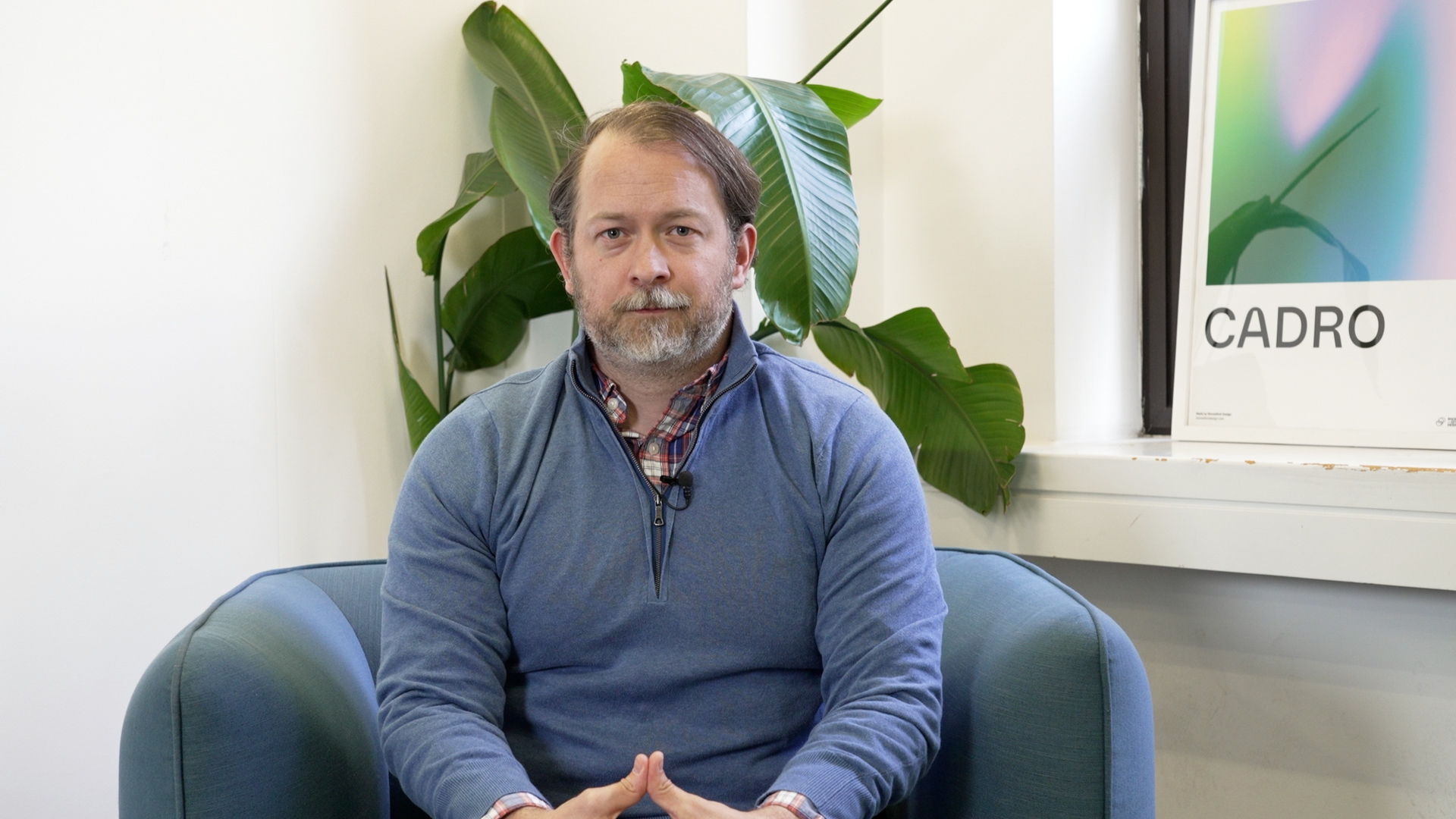
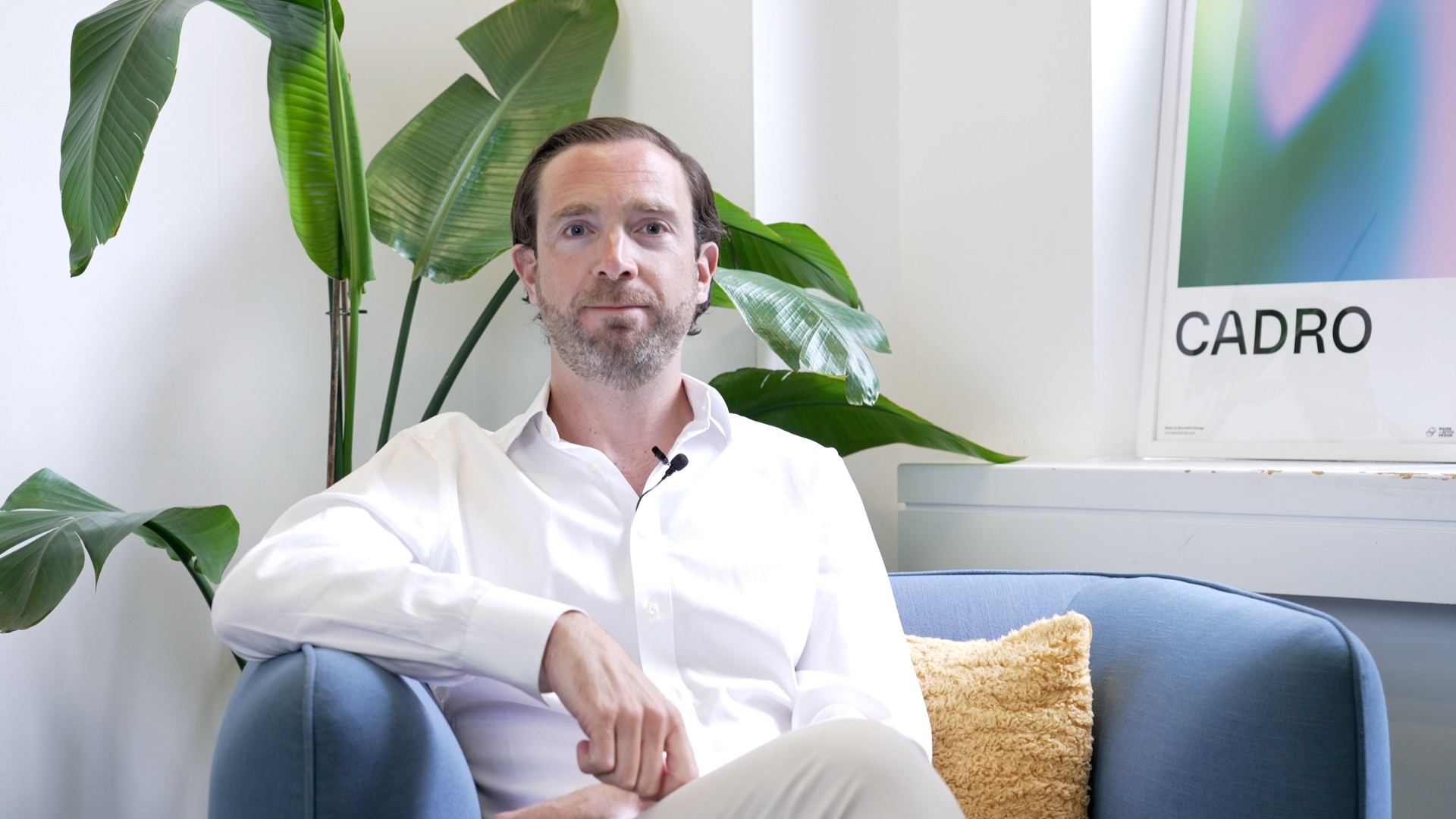
In the latest episode of Coffee with Cadro, Jamie Kahn meets up with entrepreneur and Grind founder David Abrahamovitch at the coffee empire's London roastery.
They discuss how, at 25, David lost his father and decided to turn the family's mobile phone business into a coffee shop and cocktail bar.
Fifteen years later, Grind is one of the UK's most successful and recognisable brands, turbo-charging its hold on the retail coffee and e-commerce markets, before signing major partnership deals with the Soho House group and British Airways.
It would be easy to look back on the enormous success of Grind's tongue-in-cheek marketing strategy and instinct for customer demand with pure pride – but David shows his incredible strength as a leader through humble, clear-eyed analysis and a knack for keeping cool, whatever the occasion.

In conversation
Jamie Kahn:
Every now and then, a business comes along that changes the rules. Not by inventing a new product, but by making people see an old one in a completely different way. Grind is one of those businesses. What started as a single independent cafe in London’s Shoreditch, has become one of Britain's most recognisable brands.
But coffee was never really the story. This is a story about vision, bold decisions and relentless execution. A brand that doesn't just sell a product, it shapes a culture.
Welcome back to Coffee with Cadro, with the roastery behind us which is pretty impressive. And I’m really pleased to welcome David Abrahamovitch. Thank you so much for joining us.
David Abrahamovitch:
Thank you for having me.
Jamie Kahn:
It's really so interesting to hear how these stories start out and so, I'd love you to take us right back.
David Abrahamovitch:
It started on a little building on Old Street roundabout. So, my dad signed the lease on what was then the family business, a mobile phone shop, in 1993. I would work in that building as a summer job. And I really learned so much about the world in my summer jobs there: selling phones, repairing phones, talking to customers. Pretending on the phone to be a grown up, even though I was 13 or 14, trying to sell someone something or another. So, I learned a huge amount there. And he didn't own the building, but he had a very long lease and it really felt like it was our building. As you know, unfortunately he passed away when I was 25, so I inherited the business.
I decided to close down the mobile phone element of it, but really wanted to do something with that original building. And I felt the best use for it was a coffee shop, and I thought: that looks easy, let's do that.
Jamie Kahn:
You actually opened next door to a Starbucks.
David Abrahamovitch:
Yeah. I always think that one of the great things was I didn't have to pick a first location because we had a first location, and actually it was solving backwards from: got this location, what are we going to do with it?
We were so lucky with that first location. And I think there's a world in which I did all of the same things, but we're not sat here having this conversation because we just didn't have that prime, visible, such a unique unit that everyone knew and could see. And that allowed the business to be a success from day one. I didn't think twice about the Starbucks next door. Honestly, did not think twice about it. I think Starbucks do what they do and they do some things really well, and there's things that I think they could do differently or better. But we are, of course, in competition with Starbucks, but in reality, we're in competition for attention and for people's time as much as anything else.
Jamie Kahn:
It goes way beyond just a coffee shop, if you like, cocktails, DJs, a whole culture around that. Was that intentional from the start? And also, when did it start going from something that might be temporary to something that, this is actually real. We're creating a whole new concept in coffee culture.
David Abrahamovitch:
We were throwing people out at 5 pm. It was busy. I was like, this is insane. We need to do beer and cocktails. And that was when kind of the espresso martini thing came about. And of course, if you've got a great coffee and a great espresso machine, you can make a great espresso martini. And that was one of the big building points because now we're a cocktail bar at night and a coffee shop during the day.
We just doubled the business without doubling the overheads. And that kind of allows the next thing to happen, which then allows you to raise a bit of money and replicate. And it's like these early building blocks, like becoming a cocktail bar and adding the music, adding the recording studio upstairs with Kaz who I set up the first location with. Kaz James is a DJ from Melbourne and an old friend. Those building blocks allow the whole rest of the story to happen.
Jamie Kahn:
The brand has formed just organically and I think that really does come across, it's such a cool sort of vibe. Some of the hilarious ads that I used to see on the tube. Can you talk to me a little bit about that?
David Abrahamovitch:
I think there was one about Jacob Elordi’s bathwater just after Saltburn came out. Look, and I think again - our whole tone of voice goes back to the early days, the building blocks and the cinema sign that we have at Shoreditch Grind which basically became like our little window onto the world.
So, whatever had happened, we were commenting on it in the same way that people do, maybe on a blackboard outside a coffee shop. But this was like up on a cinema sign in front of a 100,000 vehicles a day going through that roundabout or something, right. So, this was our version of reacting to politics, to culture, to music, and that became the tone of voice that was on the tube ads and even on our packaging. And like, it's all about just finding those ways to separate yourselves from the much bigger businesses that don't do this stuff and don't have fun.
Jamie Kahn:
How did you adapt to Covid and what actually came out of Covid?
David Abrahamovitch:
I guess chapter two starts 2019. - Right. We were at that point, I don't know, a dozen stores, 300 people or something, three rounds of crowdfunding, you know, fairly visible, you know, proper business.
And having just done our third and what turned out to be our final crowdfunding, we had some money and we had that earmarked to do three stores, let's say £1 million per store. We instead kind of made quite a strategic decision for once, because it wasn't always that strategic - it was much more kind of instinct and evolution. Let's put this money into a new roastery and into compostable coffee pods for the home.
Jamie Kahn:
What was your instinctive reason for that investment? That’s a lot of money.
David Abrahamovitch:
I think the itch was I feel like I should be making coffee at home, but I'm not and that kind of feels insane. And then I guess the push on the whole thing was just people telling me how much they love the Grind brand all the time. And this was kind of like subscription and direct-to-consumer (D2C) is booming. So, it was like, hold on, okay, coffee pods could fit through a letterbox, could work on subscription, could be a way to take the brand outside of just our physical stores and nationally and internationally.
But again, it was like a number of kind of itches and pushes and pulls towards making that decision. I think that was a good and sound set of decision making. And I think that was a good thing to do. But then Covid comes along in March 2020 and it obviously got proven by circumstance through luck – if you can call Covid luck, strange thing to call it. But you know, through what happened, it turned out that having an online arm of the business was really, really important.
Jamie Kahn:
Some of the partnerships are some of the most significant, I would say, in retail. So, obviously Soho House, British Airways, you're now B Corp certified which is incredible. Can you talk to us a bit about that?
David Abrahamovitch:
You know, it's crazy, but the direct-to-consumer business is the biggest part of the business now. It's about twice the size of the high street business or something. But we're also in grocery now.
So our instant coffee, whole beans, pods and ready-to-drink cans are in about 10,000 stocking points across the UK. You know, all of the major grocers. So, that's a huge part of the business and the fastest growing part of the business now. In foodservice, offices, hotels and then yeah, partnerships as well. So, most notably as you said, Soho House and British Airways are kind of our two key ones. So, Soho house, we've been working with since 2020 as well, a lot happened in 2020.
They've been amazing partners and obviously amazing for visibility. And we work with them globally, so we roast for them in New York as well, and we supply them, in pretty much all of their locations except for one or two of the really far flung ones. And then British Airways, we started on board with them two summers ago, so, that was only on European routes to begin with. But as of a month ago, we've expanded that and we’re now their preferred global coffee partner. So, you'll find us in the lounges and on all the long haul flights as well.
Jamie Kahn:
Do you literally go and knock on the door of Soho House? Do you knock on the door or British Airways, you know, how does that work?
David Abrahamovitch:
In my experience, it happens in probably one or two different ways. There's something to be said for just staying alive, staying in the game, doing a good thing, keeping to your values and things do come along because when British Airways are thinking ‘okay, we've been with the old coffee partner for a while, maybe we should go see what's out there,‘ you're on the list of people that get an email.
So, you know, I think that particular one, we were actually at a trade show primarily designed for grocery. We had one of our pink trucks there serving coffee, giving out products. And it was that that instigated the conversation. So, you know we spent however much we spent to be at some grocery trade show and it was helpful for that. But actually probably the biggest thing we got out of it was the BA (British Airways) thing. I would like to think that we would have ended up in the process of ‘okay, we're going to have an initial conversation with ten companies. Grind will be on the list.’
So, I think there's something to just like, you know, sticking to your values and sticking to what you do and then staying alive, getting scale and these things come to you. And then sometimes it can be just someone you know at a really high level can help make it happen.
Everyone gets very focused on like how did the first thing happen? In reality, the first thing is the first half a percent. You know, doing the deal with British Airways took a long time and it took a huge number of meetings and involved probably 3 dozen people, if not more at British Airways, right? So, the opening of the door is really important and you kind of have to get the doors open however you can but you've got to have so much to actually deliver: Supply chain, health and safety, product quality, brand reach, like technical stuff. You've got to be willing to go through the contracting process. There's a lot that comes after that initial door opening as well.
And that's just stuff that you pick up and you learn over time. And your second deal with a big company is slightly easier than your first deal with a big company.
Jamie Kahn:
What do you think your kids would back at most eventually, and what would they be, what would make them smile most, do you think, about what you created?
David Abrahamovitch:
I would just like them to go OK, wow, he created this thing and it's great. And people really like it. And it's added to the world in some tiny, tiny, tiny way. It's been net beneficial to the world. So, the customers love it. People have it in their homes and like it. The people that work there are glad it exists, and they're glad they work for that organisation.
And it carries on and it means something, right? And I think there is a value to creating a brand that is going to outlive you. That's what I want, really. I want it to just continue to stand for what it stands for and be perceived as being good. And I'm sure it will go through shifts, and I'm sure it will have some ups and some downs.
But, you know, just something that outlives you, right? It's like, why are we drawn to building buildings? I think as humans, we're kind of instinctively drawn to creating things which might outlast us.
Jamie Kahn:
What was that that drove you to have the confidence to launch something like this?
David Abrahamovitch:
Yes. It's a good question. And I look back and I think, God, what was he thinking? Like, what was 25-year-old me thinking? But I think part of the answer is being 25 is great because you think you know everything. And I was convinced back then I knew a lot more than I think I actually know now, despite having 15 years of now, you know, building the business.
I think, didn't overthink it too much, just cracked on. I think I had the fire on my back of, well, I either need to figure out a way for this building to pay the rent or I have to give this building up pretty soon. And just kind of believing that it would be fine. And I think it's important, I think if you're going to run an organisation, any organisation, you need to believe that you as an individual are going to get it right more times than you get it wrong.
So, you don’t have to believe that you can get right every time. I've made plenty of mistakes, but I probably do believe on balance I'll get six out of ten, maybe more. And, you know, I think you have to be able to convince yourself of that, and then you have to be able to convince other people on that. Right? Like, building anything is about ‘I'm going to walk up the hill. Are you coming with me?’ kind of thing.
You know, if I sat down in 2011 and said, I'm going to build the UK's break out challenger coffee brand and we're going to do stores and online and grocery and B2B. And we’re going to do all of our own manufacturing and that you are going to do a B Corp, and we're going to have stores in Dubai and roastery in New York. I mean, your head would just fall off, right? So, bit by bit, believe in your gut and your instinct, but knowing when you probably should listen to other people as well.
And I think there's another important thing to this, which again is something that I only really appreciate now, is the safety net that I had around me to be allowed to make those mistakes that not everyone has. I feel now really grateful that I had that. The worst thing was that going to happen to me then was, it was going to go wrong, the lease would have gotten surrendered, I wouldn't have been had to pay the rent on my nice Shoreditch flat anymore, and I'd have had to move back in with my mum into her house. That was the worst case scenario for me, which was not that bad and not everyone has that as a worst case scenario, right.
Jamie Kahn:
I remember being on the roof at Shoreditch House many, many times with you. We were flying in the city. Me and Luke and other people who you knew. And you were just finishing college...
David Abrahamovitch:
Yeah, university at UCL.
Jamie Kahn:
and we were saying to you, ‘Come and join the fun in the city. Come on.’ - Yeah. And for some reason, and I remember this. I've never told you this, but I remember you saying ‘I’m going to be an entrepreneur.’ It was like you knew at that age you had a free pass to come into the city with us lot and earn a very good load of money, because it was free money in those days. But you held back and you didn't. You stuck with your own drive and belief in what we've just been talking about for the last hour.
David Abrahamovitch:
I didn't really remember that conversation. It sounds about right. And I think, you know, you're right. The absolute obvious route where a lot of my friends were, where some of my family friends were like, that path was green lit. Just go do that. And listen, there were moments after opening the first store before today where I thought, ‘jeez, my life would have been easier if I'd just gone and done that. This is so stressful and so hard.’ And there were plenty of moments, especially like in the early days when all of my friends who have done that route are starting to kind of go up and up and up by whatever measures you want, you know, mainly in earnings.
And that's not happening to me. And I'm still running around doing this coffee thing. There were moments when I when I second guessed that for sure. I think probably that comes the answer to that question probably is my dad, in terms of just from an early age, watching him do his thing in his way, which appeared from the outside to be going wherever he wanted, whenever he wanted in his classic car or one of his motorbikes, and just rolling around having a lovely time. And being an entrepreneur.
My mum, who I realised now with hindsight, was the sensible one who was actually, you know, keeping things level while he did this. And obviously, you know, you see these things all very differently at 40 than you do at 25, right? But I realised that, that looked fun, want to do that, kind of thing. Rather than necessarily go get a full time job. And I did try. I did some internships in some banks and stuff like that, and I just didn't feel that that was the right environment for me and I was not drawn to it.
Jamie Kahn:
We’re just coming now towards the end, where we've got a couple of quick-fire questions. So, what feels uniquely Grind now?
David Abrahamovitch:
Irreverence. Not taking yourself too seriously, but but underpinned by quality.
Jamie Kahn:
Instinct or data?
David Abrahamovitch:
Instinct in the early days. The bigger the business becomes, the more data is important.
Jamie Kahn:
What have you protected at all costs?
David Abrahamovitch:
Protect the culture at all costs because the business is the people that work in it and culture takes forever to build, is super easy to destroy in minutes.
Jamie Kahn:
What's got better as you've grown?
David Abrahamovitch:
You know what, quality. I fundamentally reject the idea that big equals bad. Look, there are temptations to cut corners along the way. And you have to push those back and say, ‘no, we're not going to do that.’ But I think quality is just is an upward upward line along with scale.
Jamie Kahn:
But what's got worse as you've grown?
David Abrahamovitch:
My hair colour. It got grayer and grayer.
Do you know what, what's got worse is the temptation for distraction has got worse. The bigger you get, the more visible you become, the more you get random things which are all on their own sound really interesting. Oh yeah, I'd love to do that. Oh yeah, that sounds good. Oh, I like that brand. We should work with them.
But that is very dangerous because it just leads to a dilution of everything. And suddenly all of the teams are spending all of their time doing these random things, and they've forgotten about the, you know, 50 million coffee pods we're going to make and sell this year. It's routine now, but that that has to still be really good and that's what pays the bills.
Jamie Kahn:
What would you tell the version of you starting out now?
David Abrahamovitch:
It's all going to be OK – Keep going.
Jamie Kahn:
Well, that links on to my last question, keeping in the game and keep going.
Are Arsenal going to win the Premiership?
David Abrahamovitch:
It's frustrating that it's not in the bag already, but I'm still just about believing. This is either going to age well or badly.
Jamie Kahn:
Yeah, you’ll be watching this in a few months. Thank you for speaking so openly and honestly. We just want to wish you all the best with everything. And, thanks again for taking the time out.
David Abrahamovitch:
Thank you for all your help as well.
This conversation was recorded in April 2026.